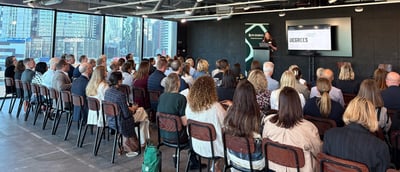




Three years ago, we gathered 12 people around a boardroom table after asking ourselves what if the for-purpose sector had access to the same calibre of data and research that larger, better-resourced organisations get?
This is really what drove the foundation of our annual For-Purpose event in partnership with McCrindle to bring fresh, sector-specific research directly to the NFP leaders. This year, we were incredibly honoured to welcome 100 not-for-profit leaders into the room.
Hope under strain
Sophie Renton, Social Researcher and Leadership Strategist at McCrindle, returned for the third consecutive year to lead the session - this time presenting a body of research titled Hope Under Strain: Perceptions and motivations shaping the Australian psyche and giving behaviour. She walked the room through the data with her trademark clarity and warmth (impressively, through not one but three fire alarm interruptions).
Sophie reflected on what these events mean for the sector:
"These events are a fantastic opportunity to get a range of different not-for-profits in the room with access to some of the latest data and latest trends - so that you feel more informed to make the best decisions for the organisations entrusted to you. But not only do you get the data, you get great conversations with others in your industry who are going through the same thing. You can bounce ideas, and you can learn from each other and grow together."
Here's what the data told us.
The mood of the nation
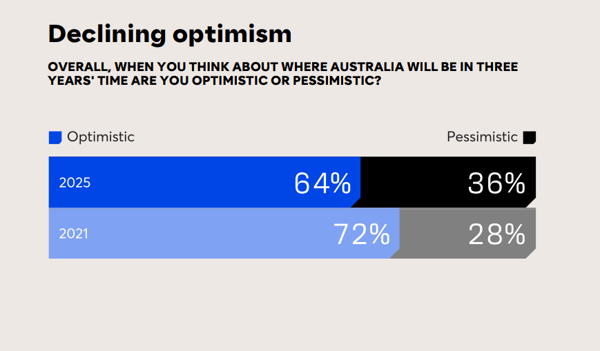
Australian optimism has softened. In 2021, 72% of Australians felt optimistic about where the country would be in three years. By 2025, that figure had dropped to 64% - with cost of living pressure, global uncertainty, and rising conflict all weighing on community sentiment. Sophie noted that in many ways, the current mood is tracking similarly to what Australians felt during the early days of COVID.
But context does matter, and for the for-purpose sector, a community under pressure is also a community that needs what NFPs do more than ever.
Giving is holding, but the picture Is nuanced
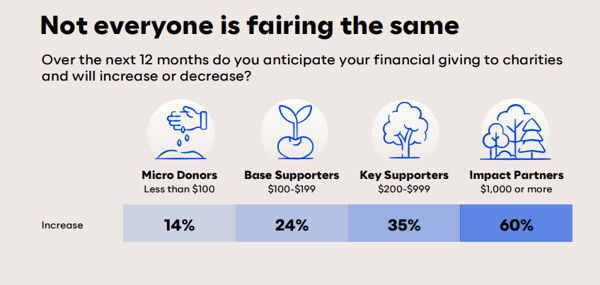
The giving data is encouraging on the other hand. Financial giving has remained broadly steady over the past decade, and 2026 shows an uptick in annual giving. Most donors anticipate keeping their giving at the same level over the next 12 months, with 29% expecting to increase it.
But the headline figure masks variation across donor segments. Impact Partners, those giving $1,000 or more annually - are remarkably resilient: 60% expect to increase their giving, and 71% give at least monthly. Micro Donors, by contrast, are feeling the squeeze most acutely.
What this points to is the growing importance of segmentation and tailored stewardship. A one-size-fits-all approach to donor engagement is no longer enough, and the generational data makes that even clearer.
Cause first, but brand still matters!
When asked what matters more - the cause or the reputation of the organisation, 68% of donors said the cause wins. It's a finding that resonates, but it comes with an important qualifier, that the remaining 32% matter too.
You can't neglect your brand and expect support to hold. Donors who feel connected to a cause will find another organisation delivering on it if yours doesn't feel trustworthy or credible. The data shows that 76% of donors prefer organisations working on root causes over those responding to immediate needs, and 43% would reduce their giving if they couldn't see visible impact over time.
Cause gets people in, brand and impact evidence keeps them.
The generational lens
This is where the room really leaned in, and where the data consistently surprises, not because the differences are unexpected, but because the degree of difference often is.
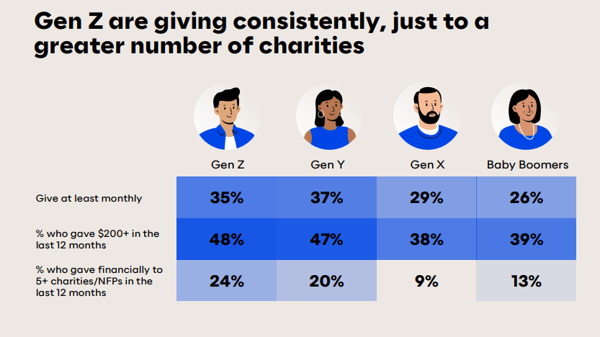
Gen Z is giving consistently and at scale: 35% give at least monthly, 48% gave $200 or more in the past year, and they spread their giving across a greater number of organisations. Nearly half (48%) anticipate increasing their giving in the next 12 months - compared to just 12% of Baby Boomers.
How they want to be thanked is equally striking. Gen Z is 6.7x more likely than Baby Boomers to value early access to research or campaigns as a form of recognition. More than half of Baby Boomers say no thank you is needed at all. The donor journey - from what inspires someone to give, to how they want to be acknowledged looks different across generations. Building engagement strategies that reflect this is one of the clearest opportunities the sector has right now.
Hear from Cath Hoban, Director Fundraising, Partnerships & Revenue Growth at Australian Red Cross, and Vibeke Stisen, Executive Manager Engagement at Bush Heritage Australia, on what this data meant for them.
AI & the workforce
The session's final stretch turned the lens inward - onto the workforce navigating all of this change.
58% of Australians are nervous about AI replacing human jobs, with Gen X feeling it most acutely (60%). Yet 71% of workers are already integrating AI into their workflows in some capacity, and Gen Y is leading the charge in actively redesigning how they work around it.
For leaders, this creates a tension to hold - how do you embrace AI's genuine efficiency gains while making sure your people, especially those who feel most uncertain about it feel valued and included in what comes next?
Hear from Jac Fletcher, Chief Fundraising & Marketing Officer at Foodbank, and Sophie Renton, Social Researcher and Leadership Strategist at McCrindle, on what this means for people and hiring.
Authenticity as competitive advantage
The session closed with a provocation - if your organisation's logo was removed from an email, would your donors still recognise your voice?
In an environment where institutional trust is under pressure, authenticity has become a genuine differentiator. Donors, particularly younger ones are looking for organisations that feel human. Gen Z is 9 times more likely than Baby Boomers to look for a charity with humour, and 3.4 times more likely to value vulnerability. The shift is away from corporate polish and toward differentiated, recognisable personality. Not behind the logo, through the people.
What we took away
The conversations that followed the session covered a lot of ground: AI adoption, engaging younger audiences, what it takes to build and lead Gen Z teams in a way that feels authentic, and how organisations can show up more genuinely as a brand. There was a common thread through all of it, leaders walking away with a clearer sense of how shifting donor expectations are reshaping the way they think about brand, engagement and impact.
Sophie's closing line framed it well: "The future is not an inevitable destination, but something that is shaped by the trends - and these can be influenced if understood and responded to."
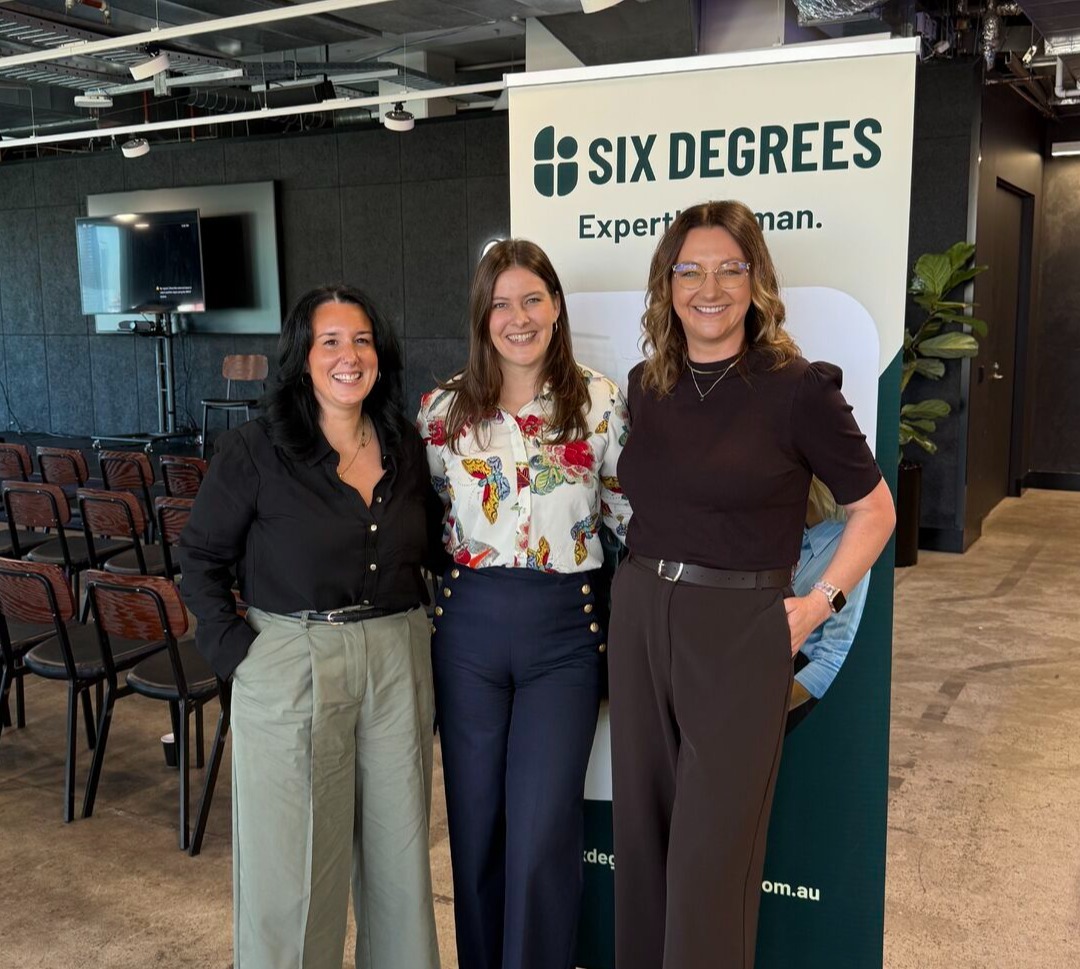
A huge thank you to Sophie Renton and the McCrindle team for sharing their research with our community, and to Lauren Madden and Danielle Martinelli for bringing the day together. We look forward to welcoming even more of you next year.
Related articles
-1.jpeg?width=400&name=IMG_2526%20(1)-1.jpeg)