




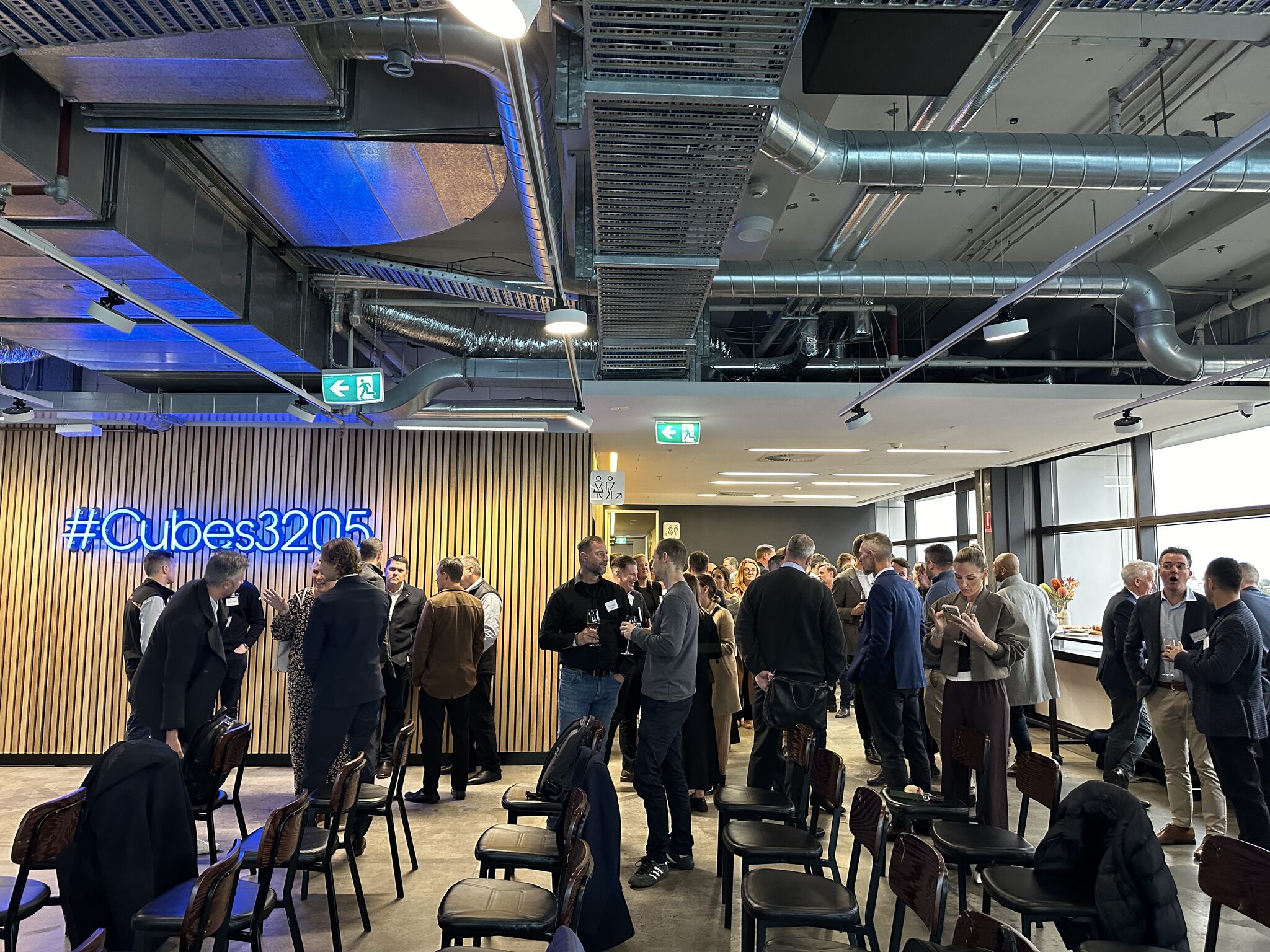
For the second year running, we had the pleasure of welcoming a room full of sales leaders for an evening of no-fluff conversation about what's changed in B2B Sales, particularly in the theme of the future – AI.
Not AI in theory, but AI as it's landing right now in pipelines, buying behaviour, and the day-to-day reality of sales teams trying to figure out what to automate, what to protect, and but investing in where the human edge still lives.
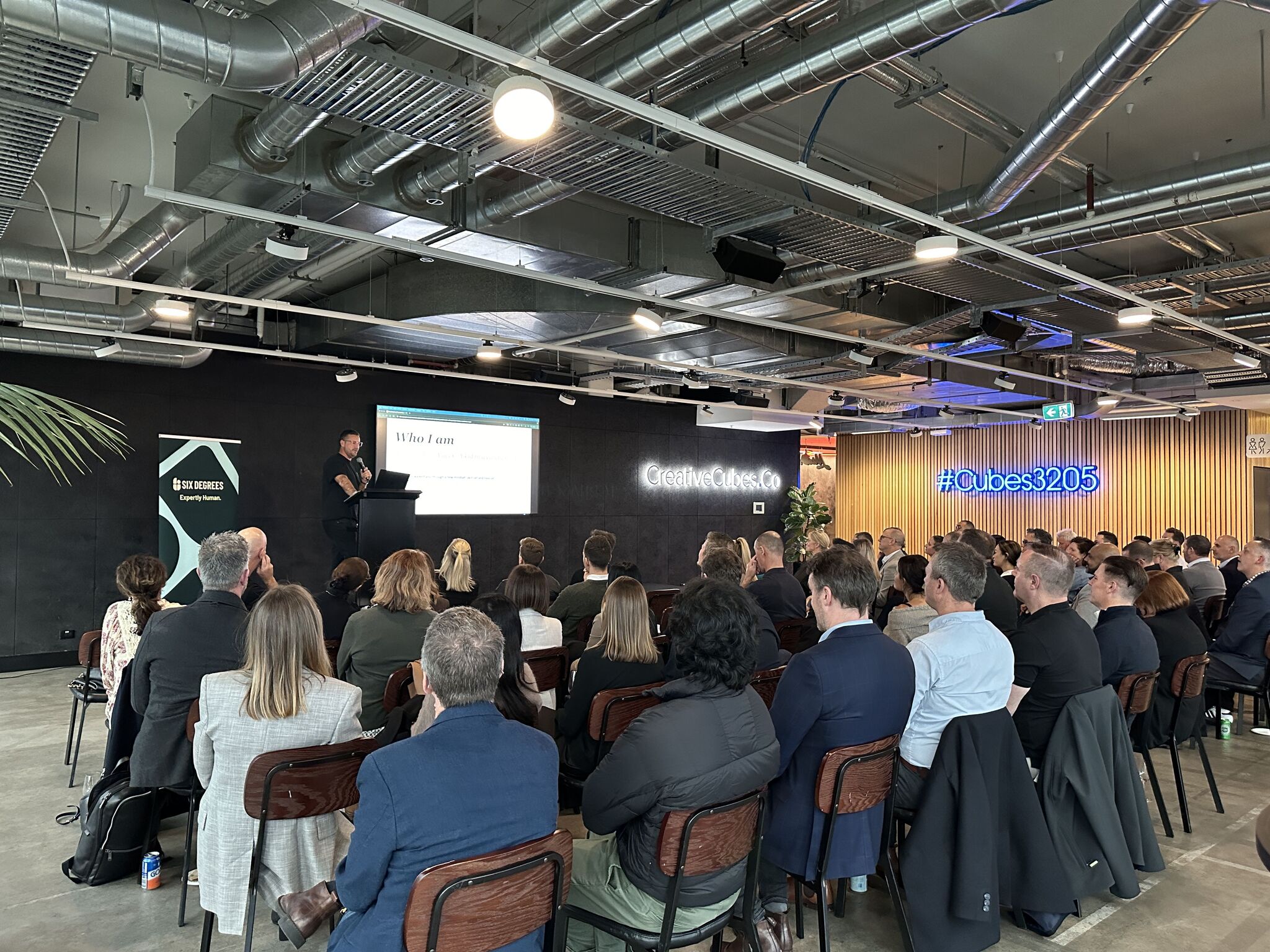
We were fortunate to have two speakers who couldn't have been better suited to the moment. Graham Hawkins, Co-Founder of Gro3, brought the research and the strategic lens. Jonathan Horne, Founder of Cyber Aware, brought the operator's perspective.
The buyer has already left the building
Graham opened with a strong statistic - 9/10 B2B buyers have now adopted generative AI, and they're using it to research, evaluate, and shortlist vendors long before a seller enters the conversation. In many cases, sellers are invisible during what would be considered the traditionally key stages for building trust and influence.
The traditional sales model was built on information asymmetry. Sellers knew things buyers didn't, and with the new wave - that advantage is gone. Buyers now walk into conversations already informed, already opinionated, and in some cases already decided.
The shift Graham described is from selling to solving - from leading with product toward understanding the problem the buyer is trying to solve, often before the buyer has fully articulated it themselves. For sales organisations that haven't made that shift, the gap between where buyers are and where sellers show up is only getting wider.
Trust Is Still the Only Currency That Matters
Where Graham drew the sharpest line was between what AI can do vs what it cannot.
By 2027, AI is expected to manage 50–60% of the total B2B buying process - supplier research, pricing analysis, buying signals, at a scale no human team could match. For sales organisations, it's already reshaping buyers' expectations when they do engage with a human.
But the capability that is and always will remain human is trust. The ability to read a room, build relationship equity that survives a difficult conversation, and form the kind of connection that no model can replicate. AI accelerates your ability to get in front of the right people at the right time - what happens when you get there is still entirely on you.
Graham put it plainly “a fool with a tool is still a fool.”
The sellers who will win are those who combine AI's scalable intelligence with the relational depth that sits alongside it. High AI and high relational intelligence - the goal isn't to pick one.
What Jonathan Horne Brought to the Room
If Graham set the strategic frame, Jonathan grounded it in operational reality.
Jonathan is someone who has built, scaled, and sold businesses - including AI-native scaleups. His throughline across every company he's run has been with the same strategy or mantra of: make the systems do work where humans can focus on the work that protects the moments where human judgement is irreplaceable.
His session opened with a reality check - AI agents are impressive in demos but in production, they're brittle. They need to be trained on your business, processes, and customers. Most organisations run on knowledge that lives in people's heads, and AI can't read minds. The organisations that will win in 2027 are those who spent 2026 building the infrastructure to use these tools well, rather than still debating whether to start.
When automation gets It wrong
Jonathan shared a story from one of his own businesses - a domain name brokerage called Perfect Domain.
His team built an AI agent to manage domain sales end-to-end - handling email chains, requesting invoice details, and sending follow-ups. It worked smoothly until a buyer asked a clarifying question about the selling entity's ABN. The Agent answered confidently, providing a number that didn't exist. The buyer, sensing something was off, pulled out of the deal. AI wants to answer your question, and it will, even if it’s incorrect.
The lesson here was that automation without human judgement destroys trust. And without trust, there is no influence. When choosing what to automate, human touchpoints, especially this early in the connection will in the long run do more damage than good.
Where to start
Jonathan's practical framework for AI readiness came down to three pillars - governance, culture, and data, and four actions he challenged the room to prioritise:
- Write an AI policy, and keep it to one page.
- Appoint an AI Champion - one named person, KPI'd on adoption and reporting to leadership.
- Open a wins channel where people can share what's working, what's failing, and what they've rebuilt.
- And start capturing data by recording meetings, logging decisions, and documenting the institutional knowledge that currently lives only in people's heads, because AI can only amplify what you feed it.
Overhauling everything at once never works and doesn't allow room for failure. Pick one, start tomorrow, and build from there. The organisations still in the planning stage when the gap becomes a crisis will have left it too late.
What the room took away
The conversation that ran through both sessions and through the room afterward was AI is moving faster than most organisations are, but buying more tools is not the response.
Sales leaders left energised recognising that the human skills built over years of selling - building trust, asking better questions, navigating complex conversations - are becoming more valuable as AI takes over the rest. But only when paired with the operational capability to work smarter at every other stage of the process.
A huge thank you to Graham Hawkins and Jonathan Horne for sharing so openly, and to Emma Heffernan and Terence Craig for bringing the evening together!

Related articles

-1.jpeg?width=400&name=IMG_2526%20(1)-1.jpeg)